 DriveCircle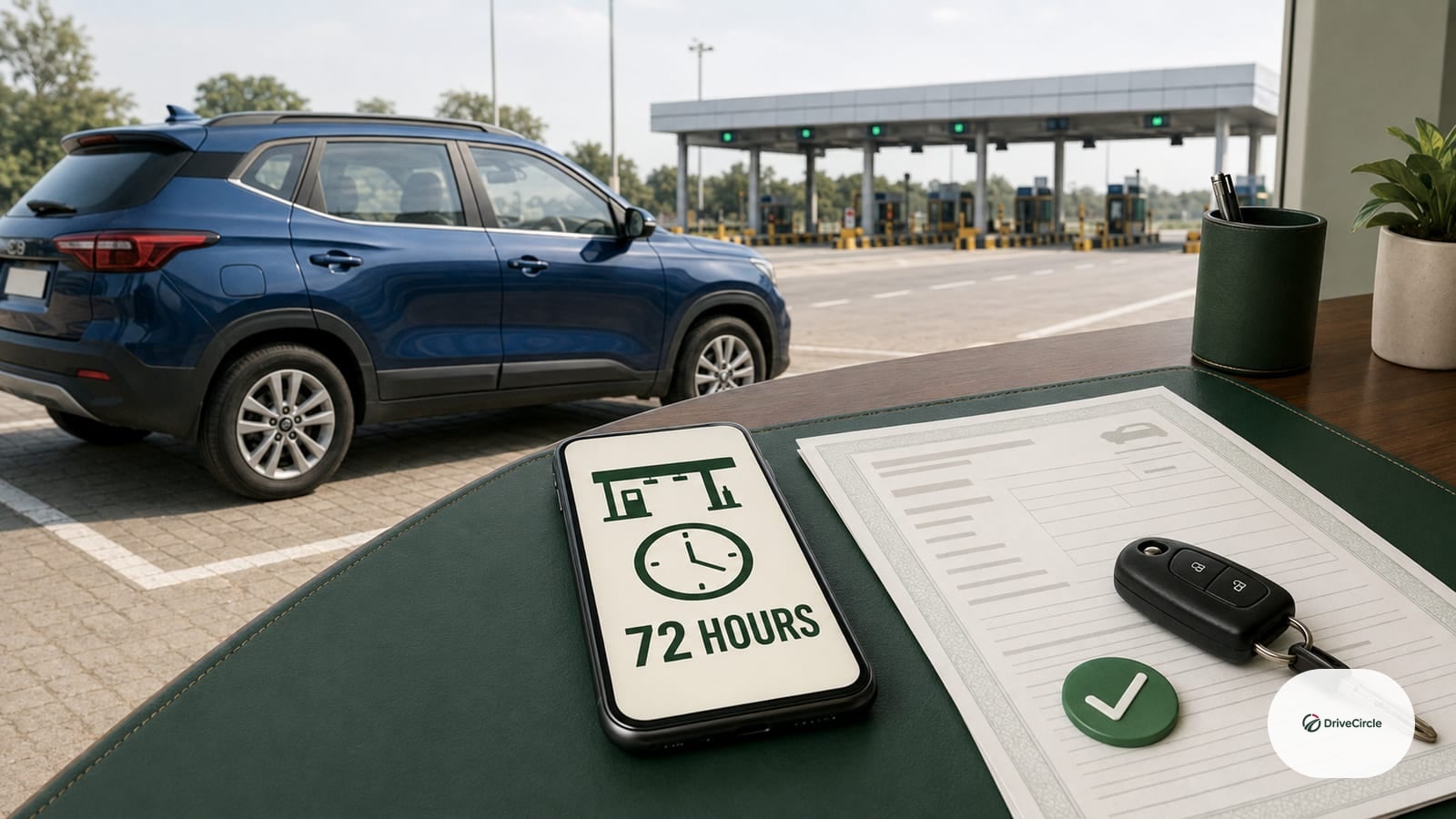
A missed National Highway toll is no longer only a problem at the toll point. Under rules notified in 2026, a qualifying unpaid user fee can generate an electronic notice, become twice the applicable toll after the initial relief window, reach the VAHAN system and affect specified vehicle-related services.
For private owners, the most important practical consequence appears when selling a vehicle or moving it between states: the government has linked clearance of unpaid National Highway user fees with the No Objection Certificate process.
This does not mean every FASTag error automatically creates an enforceable debt. The rule defines an unpaid user fee around a recorded vehicle passage where the applicable National Highway fee was not received. Owners also receive a time-limited opportunity to pay the original amount or challenge an incorrect notice.
Two Rule Changes Work Together
There are two related developments:
- On 20 January 2026, MoRTH announced amendments to the Central Motor Vehicles Rules linking unpaid National Highway user fees with NOCs for ownership or inter-state transfer, fitness certificates and National Permits.
- The National Highways Fee (Determination of Rates and Collection) (Second Amendment) Rules, 2026 came into force on 17 March 2026 and created the structured e-notice, payment and dispute process.
Read the 20 January 2026 PIB release, the 18 March 2026 PIB explanation and the official Gazette notification, G.S.R. 191(E).
What Counts as an “Unpaid User Fee”?
The March rule defines it as the user fee payable for use of a section of National Highway where Electronic Toll Collection infrastructure recorded the vehicle's passage but did not receive the applicable fee.
This definition matters. A low-balance warning, a temporarily blacklisted tag, an incorrect lane message or a disputed deduction is not automatically the same thing as a final unpaid-fee record. The e-notice should identify the vehicle, occurrence date and location, and amount claimed.
The Owner's Timeline: When the E-Notice Is Issued
The notice is issued in the name of the owner recorded in VAHAN. It may be served through SMS, email, a mobile messaging application, another specified electronic method or physical form. It should also be available on an online portal designated by the government.
This makes current VAHAN contact information important. If an old phone number or email remains associated with the registration record, the owner may not see a notice quickly.
Within 72 hours: pay or challenge
The amount stated under the rule is normally twice the applicable user fee. However, if the unpaid fee is paid within 72 hours from issuance of the e-notice, only the original applicable toll is payable.
An owner or driver who believes the notice is wrong may submit a representation through the designated portal within the same 72-hour period.
Within five days after a representation
The executing authority or concessionaire must examine the representation, dispose of it and communicate the decision electronically within five days of receiving it. If it is not disposed of by the end of that period, the rule says the claim to the unpaid user fee shall cease.
After 15 days
If the fee remains unpaid for 15 days from issuance and no representation is pending, the recoverable amount can be posted to the National Vehicle Registry — VAHAN. Specified restrictions may then be imposed on vehicle-related services until the amount is paid.
Which Vehicle Services Can Be Affected?
The January Central Motor Vehicles Rules announcement explicitly states:
- An NOC for transfer of ownership or transfer from one state to another shall not be granted until unpaid user fees are cleared.
- Generation or renewal of a Certificate of Fitness is linked to clearance of outstanding fees.
- A commercial vehicle seeking a National Permit must not have an unpaid user fee.
- Form 28 now requires disclosure of a pending unpaid-user-fee demand.
For an ordinary private-car reader, the NOC and ownership-transfer consequences are the most relevant. Fitness-certificate and National Permit provisions have additional importance for commercial vehicles.
Do not add insurance-renewal restrictions to this list without a separate, applicable official rule. They are not stated in the two primary government explanations cited here.
Before Selling Your Car
Do this before accepting final payment or scheduling the RTO transfer:
- Check whether any official unpaid-user-fee demand is recorded against the vehicle.
- Review recent FASTag statements and toll journeys.
- Confirm that the registration record has your current phone number and other required contact details.
- Resolve any genuine fee or file a representation against an incorrect notice within the permitted window.
- Save payment receipts, complaint references and decisions.
- Remove or close the FASTag according to the issuing bank's process after handover; do not assume an RC-transfer request automatically closes it.
- Record the exact date and time of delivery to the buyer and keep the sale agreement, delivery note and transfer submission proof.
An unresolved ownership transfer creates more than a toll problem. Notices may continue to reach the person still recorded as owner in VAHAN.
Before Buying a Used Car
Ask the seller for:
- RC and owner-identity consistency.
- Pending challan and applicable toll-demand status.
- FASTag closure or transfer confirmation from the issuing bank.
- Form 28/NOC status when an inter-state transfer is involved.
- Signed sale and delivery records stating the handover date and time.
Do not rely only on a dealer's statement that “everything is clear.” Preserve screenshots or receipts from the relevant official system used at the time of transfer.
What If the Notice Is Wrong?
Possible factual disputes include:
- The vehicle was somewhere else at the stated time.
- The registration number was read incorrectly.
- A cloned number plate is suspected.
- The vehicle had already been sold and delivered before the passage.
- The fee was paid but not reconciled.
- The vehicle class or toll amount is incorrect.
Useful evidence can include FASTag statements, toll receipts, bank debits, GPS or trip history, parking receipts, dated service-centre job cards, office or residential entry records, sale and delivery documents, photographs and a police complaint where cloning or fraud is suspected.
Keep original files and make the representation factual. State what is wrong, attach evidence and retain the acknowledgement and submission time.
Treat Toll Messages as a Phishing Risk
An e-notice system can be copied by scammers. Do not enter banking credentials through an unfamiliar SMS or WhatsApp link merely because a message creates urgency.
Safer practice:
- Verify the notice through the officially designated government or NHAI channel available at that time.
- Check the domain carefully rather than trusting the display name.
- Avoid installing an app from a message link.
- Never share an OTP, UPI PIN, card PIN or screen-control access.
- If the official dispute portal is not identifiable, contact NHAI or the FASTag issuer using contact details obtained independently from its official website.
The March Gazette says a designated online portal will be specified. This article does not invent or recommend a portal URL until the government identifies and operates it officially.
What a FASTag Owner Should Maintain
A simple monthly habit can prevent a surprise during a sale:
- Keep sufficient FASTag balance or auto-recharge configured within your comfort level.
- Review debits after highway trips.
- Report duplicate or incorrect transactions promptly to the issuer.
- Keep the vehicle's VAHAN and bank contact details updated.
- Archive important notices and dispute outcomes with the vehicle's documents.
- Check dues before applying for an NOC, fitness certificate or National Permit.
DriveCircle's ownership record can be useful here: preserve the trip date, FASTag statement, notice, payment receipt, complaint reference and transfer documents in one vehicle timeline rather than searching across SMS, email and bank apps months later.
The Practical Takeaway
The new system is built around a clear clock. A recorded unpaid National Highway fee can produce an e-notice. Within 72 hours, the owner can pay the original toll or challenge the demand. An unresolved fee can double, reach VAHAN after 15 days and interfere with specified vehicle services.
For sellers, check and settle or contest dues before beginning the transfer. For buyers, verify the vehicle's status and insist on proper transfer documentation. For everyone, use only an official channel and treat payment links in unsolicited messages with caution.
Related DriveCircle reads: FASTag, tolls and trip costs, real owner-recommended road trips, the new-car PDI and document checklist, and the FASTag Local Pass and RajmargYatra 20 km rule if you live near a toll plaza and want to avoid full toll on every local crossing.
This article provides general information based on rules and government explanations available in 2026. Portal availability, implementation details and service restrictions can change. Verify the current official position before making a payment, dispute or vehicle-transfer decision.